UniTV Android Installation Code on Devices

The applications that bring digital entertainment to the home via televisions, smartphones and streaming devices have become more important than ever for digital entertainment. Setting up may seem simple, but customers are sometimes faced with queries regarding download codes, device compatibility, permissions and account activation. For a better understanding of the UniTV Android installation code (Código de Instalação do Unitv no Android), it is necessary to research how the distribution of applications is done, as well as the need for installation instructions to be verified prior to use.

An installation code can be a handy short-cut to a download location.

Android Installation Code

An installation code is a short code assigned by the specific download utility or distribution system. A user enters the identifier and allows the tool to find the resource; rather than entering the full web address. The exact action will vary from one utility to another. A code might lead to a download page, an application package, or a different location upkept by the provider.

Codes are not common Android standards. A number that’s acceptable to one application can be irrelevant for another application. Other codes may also cease to function if a provider switches its distribution network. Therefore, users should get codes from reliable and up-to-date instructions. Don’t assume that a code used in an older article will still work.

The Similarity of Installation Codes and Activation Codes

There is a difference between installation and activation. Installation codes are used to find software and activation codes are used to grant access to a service. A user can download and install an application without a signature or subscription information. On the other hand, just having the account credentials doesn’t guarantee the proper installation of the application.

Devices and Their Compatibility

The software and hardware platforms of Android devices can differ dramatically.

1-Mobile Phones and Tabs

Mobile devices can also have battery saving characteristics that impact background activity. Prior to changing system-wide options, examine application’s supported settings for any unusual behavior.

2-Android TV or Google TV

Television interfaces have been created to be navigated by remote control. Applications optimized for mobile devices may not be optimized for this experience. Review the manufacturer’s documentation and Application compatibilities. If the software is not television-interface friendly, reading the text and using the controls might be problematic.

3-Streaming Sticks and TV Boxes

Streaming sticks and TV boxes can enhance a television’s functions but the operating systems are not the same. Some work on Android, some via a compatible television platform and some on a proprietary Soft. Not all streaming devices allow for APK installation.

The Preparation Prior to Installation

An application provider is the next piece of information you’ll want to identify, and their official installation instructions. Check that the code, download location and application name are correct in accordance with the instructions. If a guide weaves you into another site or asks for some personal data that is beyond the scope of the site, stop using that site. A good installation process will offer transparent information on the software being disseminated.

The Process for a Safe Download

The utility should be opened and the address/address code field should be checked. If the Android system alerts you of installing an app from an unknown origin, take your time and familiarize yourself with the alert. Take action only when the source has been checked by a third party and the installation has been done in accordance with the manufacturer’s instructions.

Do not turn off protection permanently. If the application is not verifiable or the device can’t run the application, then use an authorized alternative application instead.

Common Errors and Their Solutions

See below:

An invalid or expired code is provided.

The code might be old, incorrect or unsupported. Use the current provider’s documentation, rather than looking for random replacement numbers. Look to see if the download service is temporarily unavailable if the code still fails.

The Consideration for Privacy and Security

There is a potential for risks when installing software from outside the device’s store. Don’t install applications that ask for an inordinate amount of contact, message and other data that is not relevant to the application. Always use strong passwords and use multi factor authentication when available. Avoid providing account information to anyone who claims to be providing you with an “activation service.

Reliable Streaming Environment

Secure all valid documents about purchasing details for ease of renewing or supporting. If an application fails to function following an update, look at its documented and verified information from the application before you make significant changes. Multiple installations of unknown versions may cause further issues and hinder troubleshooting.

Android installation code is a convenient link in a specific download system, but it does not necessarily mean compatibility or security.

7 Internet Technologies That Help Improve Streaming Quality and Reliability

checking a home internet connection

Internet infrastructure plays a major role in determining how smoothly television content streams across connected devices. Reliable streaming depends on several technologies working together to deliver video efficiently, manage network traffic, and respond to changing connection conditions. Even a fast internet connection can experience interruptions when streaming servers, network equipment, or playback applications encounter performance limitations.

Modern Internet Protocol Television (IPTV) platforms use these technologies to support live channels, high-definition video, and electronic programme guides. Understanding Canadian streaming features also helps explain how channel stability, device compatibility, and internet performance influence viewing quality. Seven technologies are particularly important for maintaining consistent playback across different network environments.

1. Broadband Bandwidth Supports Continuous Video Delivery

Broadband bandwidth determines how much information an internet connection can transfer within a given period. Streaming requires a steady flow of video data, making sufficient download capacity essential for uninterrupted playback.

Higher-resolution content generally requires more bandwidth. A household streaming several videos simultaneously needs additional capacity because connected devices share the available connection.

Cloudflare explains that insufficient bandwidth and network congestion can slow video delivery and cause buffering. However, advertised connection speeds do not always reflect actual performance during busy periods.

Users can evaluate their connections by testing download speeds at different times. Comparing results during peak evening hours can reveal whether bandwidth limitations contribute to playback problems.

2. Content Delivery Networks Reduce Distance and Delays

Content delivery networks, commonly called CDNs, distribute video content through servers located across different geographic regions. Instead of retrieving every video segment from one distant location, viewers can receive cached content from servers closer to their network.

This arrangement can reduce latency, improve loading times, and limit unnecessary traffic across long network routes.

Netflix demonstrates this approach through its Open Connect infrastructure. The company works with internet service providers to place content delivery equipment within or near their networks, improving delivery efficiency.

CDNs are particularly useful when large audiences request popular programmes simultaneously. Their effectiveness still depends on network capacity, server availability, and efficient traffic distribution.

3. Adaptive Bitrate Streaming Adjusts Video Quality Automatically

Internet connection speeds often fluctuate during playback. Adaptive bitrate streaming addresses this problem by adjusting video quality based on available bandwidth and player conditions.

When connection capacity decreases, the streaming application can select a lower-bitrate version of the video. When conditions improve, it may return to a higher-quality version.

Apple documents this capability in its HTTP Live Streaming technology, which supports switching between streams encoded at different bitrates.

This process helps prevent repeated interruptions without requiring viewers to change resolution settings manually. However, frequent quality changes may become noticeable when connection performance remains unstable.

4. Video Compression Makes High-Resolution Streaming Practical

Uncompressed video files contain enormous amounts of information. Video compression reduces the amount of data needed to represent moving images, making internet distribution more practical.

Common compression technologies include H.264 and High Efficiency Video Coding, also known as H.265 or HEVC. These codecs use mathematical techniques to reduce redundant visual information while preserving useful image details.

The International Telecommunication Union maintains the H.265 standard, which supports efficient video transmission across different networks and applications.

Effective compression can reduce bandwidth requirements while maintaining acceptable picture quality. However, decoding advanced formats may require compatible hardware, particularly when streaming high-resolution content on older devices.

5. Network Routing Determines How Efficiently Data Travels

Network routing directs information packets between streaming servers and viewers. Data often passes through several routers and interconnected networks before reaching a television, computer, or smartphone.

Routing efficiency matters because long or congested paths can increase latency, packet loss, and inconsistent delivery times.

Mozilla Developer Network identifies variations in packet arrival times, known as jitter, as a factor that can degrade real-time video applications.

Internet providers use routing protocols and network management systems to determine how traffic travels. Although viewers cannot control every external route, they can reduce local network problems through reliable routers and wired connections where practical.

6. Buffering Management Helps Prevent Playback Interruptions

Buffering allows streaming applications to download a small amount of video before displaying it. This stored information provides temporary protection against changes in connection speed.

For example, a player may continue showing previously downloaded video while waiting for additional segments to arrive.

Cloudflare explains that buffering supports continuous playback during brief connection interruptions. However, larger buffers can increase the delay between a live event and its appearance on screen.

Streaming applications must therefore balance smooth playback with responsiveness. This trade-off becomes especially important for live sports, news broadcasts, and other time-sensitive programming.

7. Streaming Protocols Coordinate Reliable Video Transmission

Streaming protocols establish how video content is divided, requested, delivered, and played across internet connections. Two widely used approaches are HTTP Live Streaming (HLS) and Dynamic Adaptive Streaming over HTTP (MPEG-DASH).

Apple developed HLS to deliver live and prerecorded media using standard web infrastructure. The protocol divides content into smaller segments that compatible applications request sequentially.

Meanwhile, the Moving Picture Experts Group maintains MPEG-DASH, an international standard supporting adaptive video delivery over existing HTTP infrastructure.

Both approaches can support multiple video qualities and efficient distribution through CDNs. Actual compatibility depends on the playback application, browser, operating system, and supported media formats.

How Can Viewers Evaluate Streaming Reliability?

These seven technologies operate together, meaning problems with one component can affect the overall viewing experience. Reliable streaming requires adequate bandwidth, efficient delivery infrastructure, suitable compression, and capable playback devices.

Viewers experiencing interruptions should first check connection speeds, Wi-Fi coverage, and device performance. Understanding the factors affecting IPTV streaming speed, including bandwidth congestion, packet loss, and network latency, can help identify possible causes of buffering and unstable playback. Testing the same stream over Ethernet can also help determine whether wireless interference contributes to the problem.

It is also useful to compare playback across different applications and devices. Persistent problems affecting only one service may indicate limitations outside the household network.

Conclusion

Streaming reliability depends on more than internet speed alone. Broadband capacity, CDNs, adaptive streaming, compression, routing, buffering, and delivery protocols collectively determine how consistently video reaches connected devices.

As connected television services evolve, improvements in these technologies should support more efficient distribution and better playback across varied network conditions. Understanding digital television capabilities and infrastructure limitations allows viewers to identify problems more accurately and make informed decisions about their streaming setups.

Boost Your Online Content with AI Paraphrasing Tools

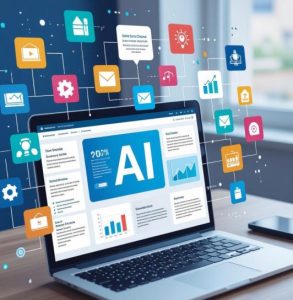
AI tools and content creationWebsite content grows stale faster than you might think. Readers crave fresh, engaging material, and search engines reward sites that deliver it. Keeping your content vibrant can feel like a constant race against time. That’s where artificial intelligence steps in, offering tools that breathe new life into your words. AI paraphrasing tools help you refresh existing content, enhance search engine optimization, and keep your voice authentic. They’re like a creative partner that never sleeps, helping you stay ahead in the digital world.

Why does fresh content matter so much? Search engines like Google prioritize websites with updated, relevant material. Stagnant pages can slip down rankings, costing you visibility. A Humanize AI text tool can rework your text to sound new while keeping the core message intact. For example, a blog post about summer fashion trends can be rephrased to highlight new styles or angles without starting from scratch. This saves time and keeps your site dynamic. Plus, these tools help you avoid duplicate content penalties, which can harm your SEO efforts.

Why Choose AI Paraphrasing?

AI paraphrasing tools are more than just word-swappers. They use advanced algorithms to understand context, tone, and intent. Unlike manual rewriting, which can take hours, these tools deliver results in seconds. They analyze sentence structure and vocabulary, offering variations that feel natural. This makes them perfect for busy content creators who need to update multiple pages or posts quickly. Here’s why they stand out:

  • Time efficiency: Rewrite entire articles or sections in minutes.
  • Consistency: Maintain your brand’s voice across all content.
  • Versatility: Adapt content for different platforms, like blogs or social media.
  • SEO boost: Refresh old content to improve search engine rankings.

Ever wondered how to keep your audience hooked? Readers get bored with repetitive phrasing. AI paraphrasers can turn a dry product description into something lively and engaging. For instance, “This jacket is warm and stylish” could become “This cozy jacket blends bold style with unbeatable warmth.” The new version grabs attention while delivering the same message. It’s a simple way to make your content pop without losing its essence.

Balancing Originality and Authenticity

Originality is the heartbeat of great content. But rewriting manually risks straying from your brand’s voice. AI paraphrasing tools strike a balance by offering fresh phrasing while preserving your style. They analyze your input to match tone, whether it’s professional, casual, or poetic. “These tools don’t just rewrite; they reimagine your words in a way that feels true to you,” says content strategist Emma Kline. This ensures your audience connects with content that feels human, not robotic.

How do you avoid sounding too mechanical? Some worry AI tools produce stiff or unnatural text. Modern paraphrasers, however, are designed to mimic human creativity. They offer multiple variations, letting you choose the one that resonates most. You can tweak the output to add personal flair, ensuring authenticity. For example, a travel blog about Paris could be rephrased to emphasize new experiences, like hidden cafes or seasonal events, keeping readers eager for more.

Practical Tips for Using AI Paraphrasers

Ready to try an AI paraphraser? Start with clear goals. Are you updating a blog, enhancing product descriptions, or creating social media posts? Feed the tool specific, high-quality text to get the best results. Here are some practical steps to maximize their potential:

  • Input clear text: The better your original content, the stronger the output.
  • Review and edit: Fine-tune the results to match your voice.
  • Test variations: Experiment with different paraphrases to find the perfect fit.
  • Check SEO: Ensure keywords are naturally integrated for search engines.

Don’t let old content hold you back. AI paraphrasers can transform a single piece of content into multiple versions for different platforms. A blog post can become a tweet, an email newsletter, or a LinkedIn article, each with a fresh spin. This versatility maximizes your reach without extra effort. “It’s like having a team of writers at your fingertips,” notes digital marketer Sarah Chen.

READ ALSO: Can AI Catch Copyright Issues Before You Hit Upload?

Looking Ahead

Your content deserves to shine. With an AI paraphraser, you can keep your website fresh, climb search engine rankings, and engage readers without losing your unique voice. These tools empower you to create content that feels alive and relevant, no matter how fast trends change. Why settle for outdated pages when you can refresh them effortlessly? Embrace AI paraphrasing to craft content that captivates and converts, all while staying true to your brand.